
 Browse Our Wide Selection of Beds, Chairs & More


By Yeti Beds Team, updated November 2026
To clean an upholstered headboard, find the care label's cleaning code (W, S, W/S or X), vacuum top to bottom with a soft brush attachment, spot test any cleaner on a hidden area, blot stains with a damp cloth instead of rubbing, then wipe away residue and let the fabric air-dry completely.
This guide covers how to clean an upholstered headboard in velvet, chenille or plain fabric, and the same steps work for any fabric headboard, including the styles in our upholstered headboards collection. The steps also work on the headboard of an upholstered bed frame, like our upholstered beds.
How to clean an upholstered headboard, step by step
Upholstered headboard cleaning takes five steps: find the code, vacuum, spot test, blot and dry.
- Find the cleaning code on the label or listing. Hekman, a furniture maker, lists its codes on the back label of its fabric swatches and in its online fabric descriptions; Better Homes & Gardens says to start with the manufacturer's care instructions.
- Vacuum or lint-roll, top to bottom, with a soft brush attachment. Luis Toja, a carpet and upholstery cleaning professional quoted by The Spruce, says to pay extra attention to seams and piping, button tufts and where the headboard meets the wall. On a tufted headboard like the Viviana grey button-tufted headboard, our view is to run the crevice tool around each button. (Hanging yours? See our guide to wall-mounted headboards.)
- Spot test. Try any cleaner on a hidden spot: a seam allowance or the back of the headboard (Better Homes & Gardens), or the lower edge (The Spruce).
- Blot, don't rub. For W or W/S fabrics, Good Housekeeping's upholstery advice gives a mild mix: 1/4 teaspoon dish soap in 1 cup warm water. Dampen a cloth with it, never the fabric, and blot from the outside in. Better Homes & Gardens warns that rubbing can grind a stain deeper. Wipe residue off with a clean damp cloth; The Spruce notes that soapy residue can attract dirt.
- Dry, then brush. Better Homes & Gardens says to clean early in the morning so it is dry by bedtime, and to let the headboard air-dry completely. The Spruce says to blot with a dry towel, open the windows and use a fan, then brush velvet or microfiber with a soft clean brush once dry.
What do the W, S, W/S and X cleaning codes mean?
Upholstery cleaning codes tell you what a fabric can be cleaned with: W means water-based cleaners, S means water-free solvents only, W/S means either, and X means vacuuming or light brushing only. Our view: go by the label, not the fabric name.
Upholstery cleaning codes at a glance
| Code | What it means | What to clean with | What to avoid | Source |
|---|---|---|---|---|
| W | Water-based cleaners | Water-based shampoo or foam upholstery cleaner; mild dish soap solution | Over-wetting; W does not mean machine-washable | Hekman, Good Housekeeping, American Leather |
| S | Water-free solvent or dry-cleaning product only | Water-free dry-cleaning solvent, or a professional | Water; use solvents only in a well-ventilated room, away from open flames | Hekman, Good Housekeeping |
| W/S | Water-based or solvent cleaners | Upholstery shampoo, foam from a mild detergent or a mild dry-cleaning solvent | Skipping the pre-test, especially important for the W/S cleaning code | Hekman |
| X | Vacuuming or light brushing only | Vacuum, soft brush | Any liquid spot cleaner: may cause shrinking, staining or distortion of the pile | Hekman, Stylus Contract, Good Housekeeping |
What does "spot clean" mean on a headboard listing?
"Spot clean" on a headboard listing means, in our reading, that the maker expects surface cleaning of marks, not soaking or washing the whole panel.
What our headboard listings say about care
| Headboard | Fabric (as listed) | Care line (as listed) |
|---|---|---|
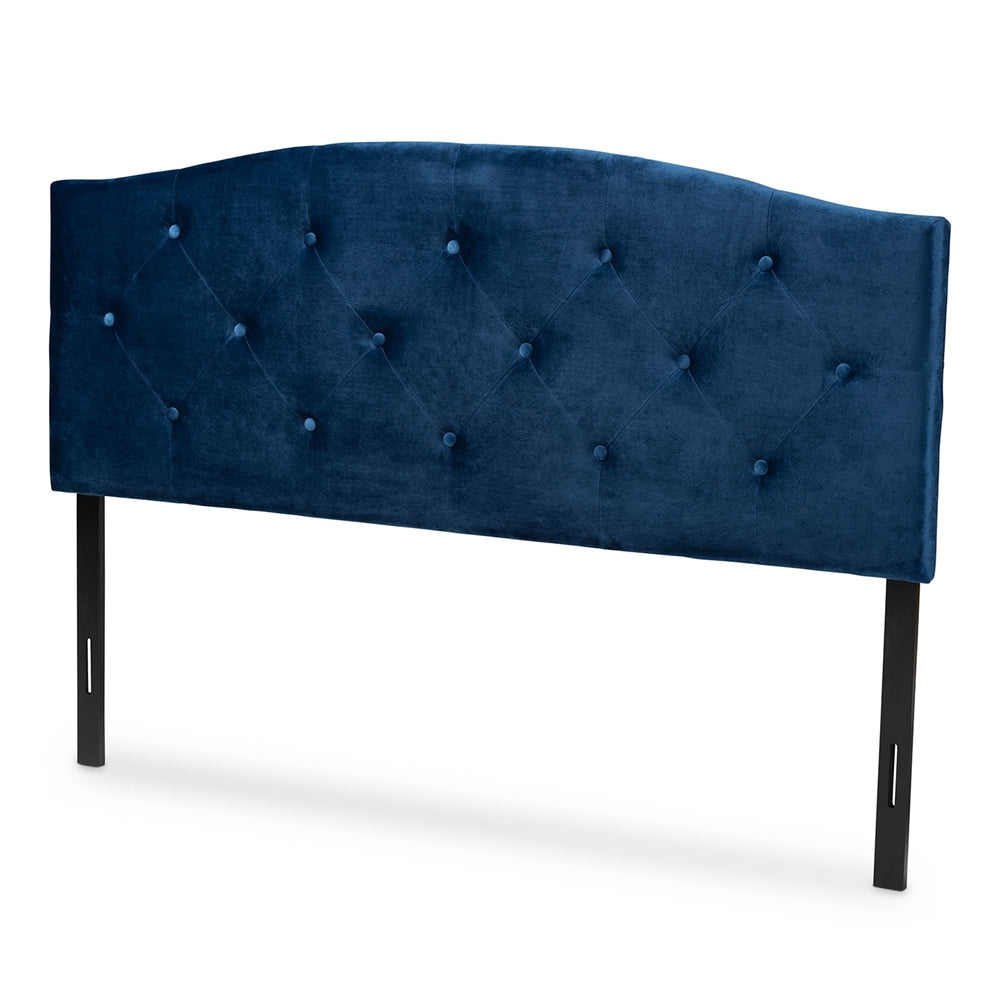
| Leone navy velvet queen headboard | 100% polyester velvet | "Spot Clean" |
| Viviana grey queen headboard | Grey polyester fabric | "Spot clean only" |
| Aubrey nailhead-trim headboard (queen) | Dark grey polyester fabric | "Spot clean only" |
| Lily navy full headboard | Textured chenille | Not listed: check the label on the headboard |
| Luma queen platform bed | Chenille | "spot cleanable, as needed" |
Our view: the care line and the label are the rule. On "spot clean" or "spot clean only" pieces, stick to vacuuming plus spot treatment, and ask a professional upholstery cleaner before steaming or machine cleaning.
Can I use baking soda on an upholstered headboard?
Yes, you can use baking soda on an upholstered headboard for odors: sprinkle it on, wait, then vacuum it all off. Good Housekeeping says to let it sit 15 to 30 minutes; Ryan Knoll, owner of the cleaning company Tidy Casa, quoted by The Spruce, says 20 to 30 minutes and that it "pulls out odors and moisture." Spot test first, as Better Homes & Gardens advises.
How do you clean a velvet headboard?
Clean a velvet headboard with a light-touch vacuum, quick blotting of spills and barely damp suds worked in the direction of the pile, then let it dry and vacuum to restore the nap.
Better Homes & Gardens' velvet guide splits velvet into natural (silk, linen or mohair) and synthetic (nylon, rayon or polyester) and says "synthetic velvet is easier to maintain." The Leone listing gives 100% polyester velvet, a synthetic. The guide says grinding the vacuum into the fibers can cause bald spots, and for stains uses a cloth just barely damp with suds, worked in the direction of the fibers, never in circles. Blot spills right away with a light-colored cloth.
For creases, the velvet guide uses a steamer on the lowest setting, then a brush against the pile. Only do that if the label allows steam; on Leone's "Spot Clean" listing, ask a professional first (our view).
How do you clean a chenille headboard?
Clean a chenille headboard by vacuuming well first and keeping moisture low, because the UK's National Carpet Cleaners Association (NCCA) said in its 2018 chenille guide that too much moisture can cause unnecessary staining. Dry it quickly with clean white cotton towels.
The NCCA also says to follow the cleaning agent maker's instructions, since excess solution can cause staining and attract soiling. The Lily navy chenille headboard listing gives textured chenille with biscuit tufting, but it doesn't list a care code, so check the label on the headboard before using any liquid. The Luma chenille upholstered bed listing gives the care line "The fabric cover is spot cleanable, as needed."
How do you get sweat or hair-oil stains out of a fabric headboard?
Treat sweat or hair-oil marks on a fabric headboard with the spot cleaner your code allows: a water-based cleaner for W, a water-free solvent for S, either for W/S, and no liquid at all for X. Blot, don't rub.
For W or W/S, Better Homes & Gardens blots with a little liquid laundry detergent or mild dish soap on a damp white rag. On all fabric headboard stains, spot test first; The Spruce warns against soaking or scrubbing.
Can you steam clean an upholstered headboard?
You can steam clean an upholstered headboard only if its care label allows it. Better Homes & Gardens says to check the care instructions first and warns that very hot steam can shrink or pucker cotton and linen headboards.
Our view: on "spot clean" listings, ask a professional before steaming.
How often should you clean an upholstered headboard?
Vacuum or lint-roll an upholstered headboard weekly to monthly and deep clean it at least once a year, says Better Homes & Gardens.
Carolyn Forté, executive director of the Good Housekeeping Institute Home Care & Cleaning Lab, says to vacuum upholstery at least once a month and plan a deeper clean once or twice a year. Ryan Knoll, quoted by The Spruce, calls every three to six months his go-to for a deep clean.
Can bed bugs live in a fabric headboard?
Bed bugs can hide on a headboard: the US EPA says they are found in cracks on the bed frame and headboard. In heavy infestations, the EPA says they can also be in the seams of chairs and couches and between cushions.
When should you call a professional upholstery cleaner?
Call a professional upholstery cleaner for an S cleaning code, since Good Housekeeping says professional cleaning is usually the safest option for solvent-only fabrics, and for X fabrics needing more than vacuuming, which Hekman says cannot be cleaned with water or solvent cleaners.
Who should skip DIY (our view): anyone with a large or set-in stain, an S label they'd rather not treat with solvents, or no label at all.
Frequently asked questions
Can you use dish soap on an upholstered headboard?
Yes, on W or W/S fabrics. Good Housekeeping's upholstery advice gives 1/4 teaspoon dish soap in 1 cup warm water, and Better Homes & Gardens gives 1 teaspoon of liquid laundry detergent or mild dish soap per quart (four cups) of lukewarm water.
Does a W cleaning code mean I can machine-wash the cover?
No. Hekman's definition of the W code says W fabrics are not machine-washable, and American Leather, another furniture maker, says a W code does not mean you can wash cushion covers in the washing machine. W means spot cleaning with water-based cleaners, without over-wetting.
Can I use a hair dryer to dry my headboard?
No. The Spruce says to avoid hairdryers and heat guns on an upholstered headboard because they can shrink the fabric or leave marks. Instead, blot with a dry towel, open the windows and run a fan, then let it air-dry completely.
What if my headboard has no care tag?
Our view: start with the gentlest method, vacuuming or a lint roller only, and ask the maker or seller for the cleaning code before using any liquid. For the Lily chenille headboard, check the label itself first. If the code stays unknown, call a professional.
What's the best way to clean fabric upholstery on a headboard?
The best way to clean fabric upholstery on a headboard, in our view, is label first: read the label or care line, vacuum often, blot don't rub, keep liquid to a minimum, and call a pro for S, X or anything the label doesn't cover.
Our recommendation: read the care line before you buy. Browse our upholstered headboards and upholstered beds.